PATH ONE
Coming Back to Yourself, Slowly
The journey home begins with noticing.
Every meaningful journey begins with awareness.
Before we learn how to regulate our emotions, understand ourselves, or create lasting change, we first learn to notice.
Path One is a gentle invitation to slow down and reconnect with yourself.
Together, we explore self-awareness, thoughts, emotions, healing, and the quiet practice of coming back to yourself. one chapter at a time.
In This Path
You'll explore
✓ Why we lose touch with ourselves
✓ Why awareness comes before change
✓ How self-awareness becomes self-understanding
✓ Learning to separate thoughts from feelings
✓ Building a healthier relationship with emotions
✓ Returning to yourself, again and again

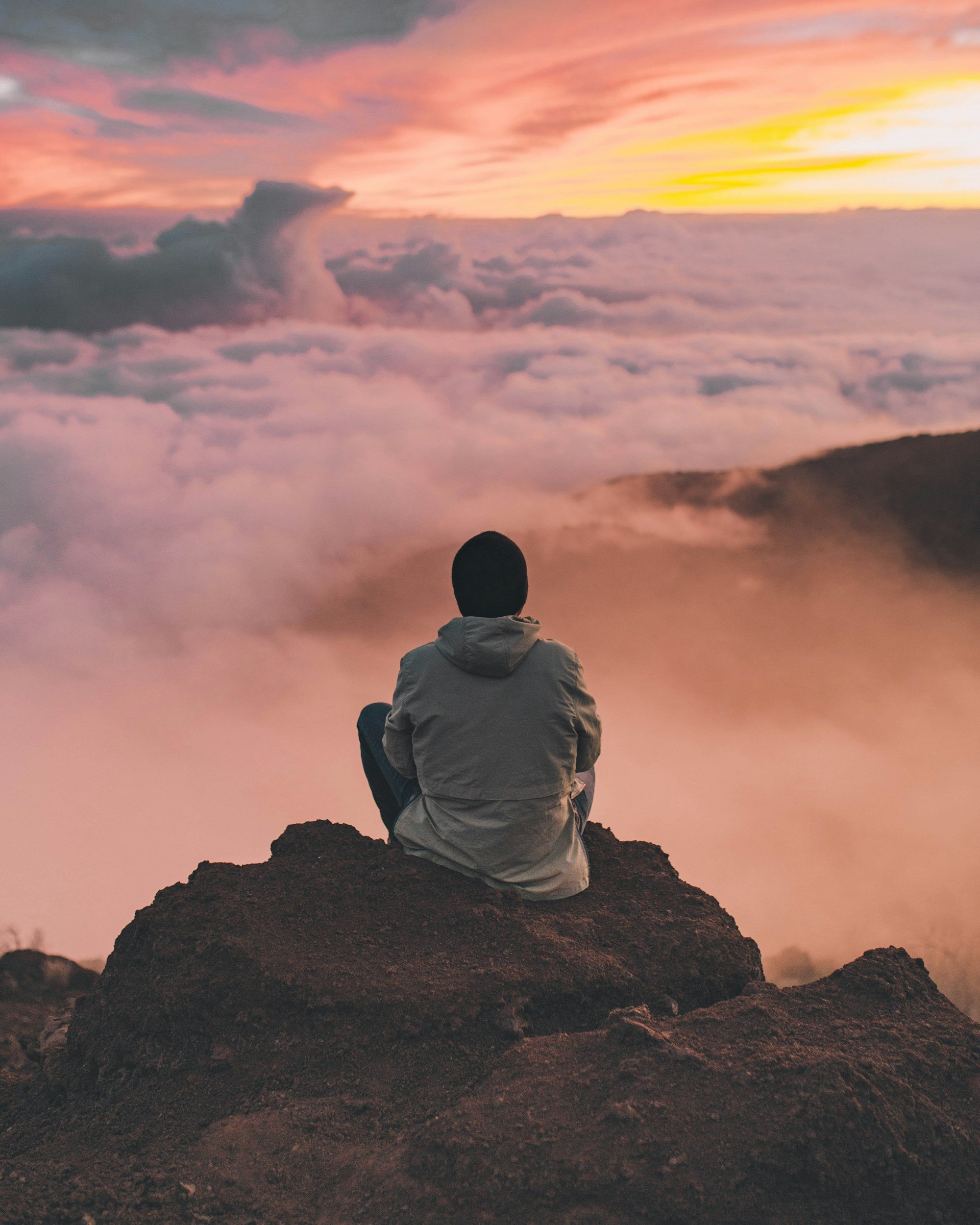
Chapter. 6
Emotions are not problems to eliminate. They are gentle signals inviting us to listen, understand, and care for ourselves with kindness.
Your Emotions Are Not the Enemy
Learning to listen before trying to fix.
Most of us grow up believing that uncomfortable emotions are problems to solve.
When we feel sad, we want to feel better as quickly as possible.
When we feel anxious, we try to make the anxiety disappear.
When we feel angry, we tell ourselves to calm down or move on.
We welcome joy, but we resist sorrow. We celebrate confidence, but we avoid fear.
Somehow, we learn that certain emotions are acceptable while others are not.
But what if emotions were never meant to be our enemies?
What if they were not problems to fix, but messages inviting us to understand ourselves more deeply?
I have come to believe that emotions are the body's natural response to our experiences.
Long before we have words, our body begins to speak.
Our heart beats faster, chest feels heavy, stomach tightens, eyes fill with tears.
Only afterward do we give those experiences a name. That name becomes an emotion.
Emotions are not signs that something is wrong with us. They are simply the language of a body and mind
responding to life. There was a time when I allowed my emotions to consume me.
When sadness arrived, I sank deeply into it. Sadness became regret. Regret became self-blame.
Self-blame slowly turned into hopelessness. Because I was afraid of experiencing that pain again,
I became obsessed with predicting the future.
I constantly searched for signs that something bad might happen. Anxiety kept my senses awake.
My mind tried to prepare for every possible danger before it arrived.
Looking back, I realize that I was no longer living in the present.
I was living inside the fear of what might happen next.
Now, my relationship with emotions is very different. I no longer try to escape them.
Instead, I begin by simply noticing them. I write in my journal. I go for a walk. I listen to music.
I smell in a favorite candle . I slowly enjoy a warm shower. Through these small acts, I gently remind myself,
"I am safe." Only then do I begin separating my feelings from my thoughts.
I distinguish reality from interpretation. Facts from imagination. Experience from the stories my mind creates.
I no longer ask, "How can I get rid of this feeling?" Instead, I ask, "What is this feeling trying to tell me?"
Perhaps this is why so many of us struggle with difficult emotions. They are uncomfortable. They challenge
our identity. They bring us face to face with disappointment, grief, fear, or uncertainty.
Sometimes they awaken old wounds we thought had already healed.
Sometimes they ask us to acknowledge truths we are not yet ready to accept.
So we push them away. We distract ourselves. We stay busy. We convince ourselves that we are fine.
But emotions rarely disappear simply because we ignore them.
What is buried often returns, sometimes louder than before.
Accepting our emotions does not mean surrendering to them.
It does not mean allowing them to control us.
Acceptance simply means allowing ourselves to experience them without immediately trying to escape.
To sit with them. To become curious about them. To gently ask, "Why does this feeling hurt so much?"
Sometimes that question leads us to memories we had forgotten.
Sometimes it leads us to younger versions of ourselves who never received the comfort they needed.
As we begin to understand where our emotions come from, they slowly become less frightening.
They are no longer strangers. They become stories waiting to be understood.
For me, the greatest difference between suppressing emotions and allowing myself to feel them is this
When I suppressed my emotions, I lived in constant tension.
I never knew when they would return or what might trigger them.
They remained hidden underneath the surface, quietly growing heavier over time.
But when I allowed myself to fully experience an emotion, something changed.
I began to recognize it. The next time it appeared, I could say, "I know this feeling." I could name it.
And once I could name it, it no longer completely controlled me. I learned to separate my emotions, my
thoughts, and my actions. That space gave me the freedom to choose how I wanted to respond.
Understanding our emotions is not about making them disappear. It is about no longer being afraid of them.
When rain begins to fall, we do not argue with the sky. We simply prepare for the weather.
Our emotions deserve the same kindness. Instead of fighting every feeling that arises, perhaps we can pause,
listen, and ask what it is trying to show us. Because our emotions are not trying to destroy us.
Sometimes, they are gently guiding us back to ourselves.
“Emotions are not disasters.
They are weather forecasts that tell us about the climate within.”